

We are in an era where user expectations are rapidly evolving and technology is rewriting the rules of design. As of 2026, UI/UX design no longer simply means “making the screen look pretty” — it serves as a bridge that understands the user, doesn’t wear them out, and makes complex processes invisible.
Especially in B2B (business-to-business) solutions, testing tools, and data-heavy platforms, users are now demanding far more than a system that merely “works” — they expect a flawless experience. So, which design trends are determining the fate of digital products in 2026? Here are the 4 major dynamics shaping the interfaces of the future.
The Evolution of Dark Mode and Depth Perception
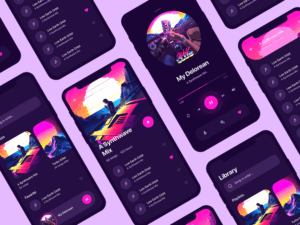
Dark mode is no longer an option — it’s a standard. However, in 2026 we’ve gone far beyond “painting the background black and making the text white.” Today’s designs foreground a sense of depth perception created through the strategic use of deep blacks, anthracite grays, and especially purple/neon tones.
- Industry Example: We frequently see this trend in software development environments (IDEs) and complex test/bug tracking dashboards. These interfaces, designed for professionals who stare at screens for long hours, minimize eye fatigue through layered shading and OLED blacks. Error rates are highlighted with red neons and success states with pastel greens, achieving a flawless information hierarchy.
“Cyberpunk” and Futuristic Touches in B2B Screens
The days when enterprise software and business tools had to be dull, washed-out tables are behind us. The “Cyberpunk” aesthetic we’ve seen in the gaming industry is now being integrated into the business world with a modern edge.
- Industry Example: Cybersecurity panels, server monitoring tools, and modern QA (Quality Assurance) platforms are rapidly adopting this futuristic language. Thin grid backgrounds, glowing status indicators, monospaced typography, and high-contrast accent colors give the interface both a professional and high-tech feel.
Gamifying Productivity (Gamification)
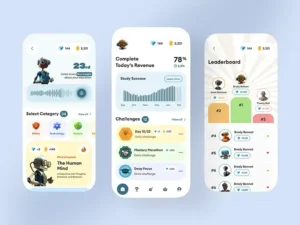
Preventing people from getting bored while performing daily, routine tasks is one of the biggest focus areas of UX design today. In 2026, interfaces don’t just guide the user — they also motivate them.
- Industry Example: Gamification mechanics are cleverly used in project management tools and data entry forms. For example, small visual rewards offered by the interface to a professional who completes a long test scenario or checklist — micro-animations, filling progress rings, streaks/streak systems — transform an ordinary task into a satisfying experience.
Invisible Interfaces and AI-Powered Micro-Interactions
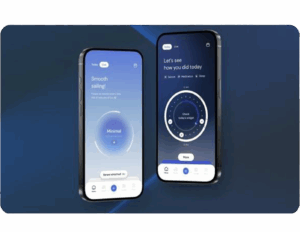
The best interface is the one whose presence the user feels the least. The concept of the “Invisible UI” reached its peak in 2026, powered by artificial intelligence. Rather than filling screens with buttons and menus, designers are now building intelligent structures that anticipate the user’s intent in advance.
- Industry Example: These smart micro-interactions can be seen in customer support software or bug reporting screens. As the user starts typing a problem, the rest of the form automatically shapes itself according to context; an elegant shimmer effect appears on the interface to indicate that AI has a solution; or smart buttons that analyze all logs with a single click… Design turns technology into an invisible and effortless assistant for the user.
 In Conclusion; a successful interface design in 2026 has a structure that can blend aesthetics, performance, and user psychology in the same mold. Whether you’re designing a test automation tool or an end-user-facing application, integrating these futuristic, minimalist, and intelligent trends into your brand’s identity will always keep you one step ahead.